The first time I tried Korean oxtail soup, I was sitting in a small Korean restaurant on a cold, rainy evening. I expected something bold and spicy, so the simple bowl surprised me.Once I seasoned my bowl and stirred in a spoonful of warm rice, everything made sense. The broth tasted clean but deeply beefy, and the meat slipped away from the bone. It was not a loud or complicated dish. It was the kind of food that felt comforting from the first spoonful.
When I decided to make it at home, I wanted that same gentle flavor without watching a stockpot all day. The slow cooker turned out to be perfect. There is a little preparation at the beginning because soaking and blanching the oxtails makes a noticeable difference, but after that the cooker handles the long simmer.
This Korean oxtail soup recipe slow cooker method has become one of my favorite weekend meals. I can start it in the morning or before bed and return to silky broth and fork-tender meat. It uses water rather than packaged beef broth, so the flavor comes directly from the oxtails, radish, garlic, and time.
What Is Korean Oxtail Soup (Kkori Gomtang)?
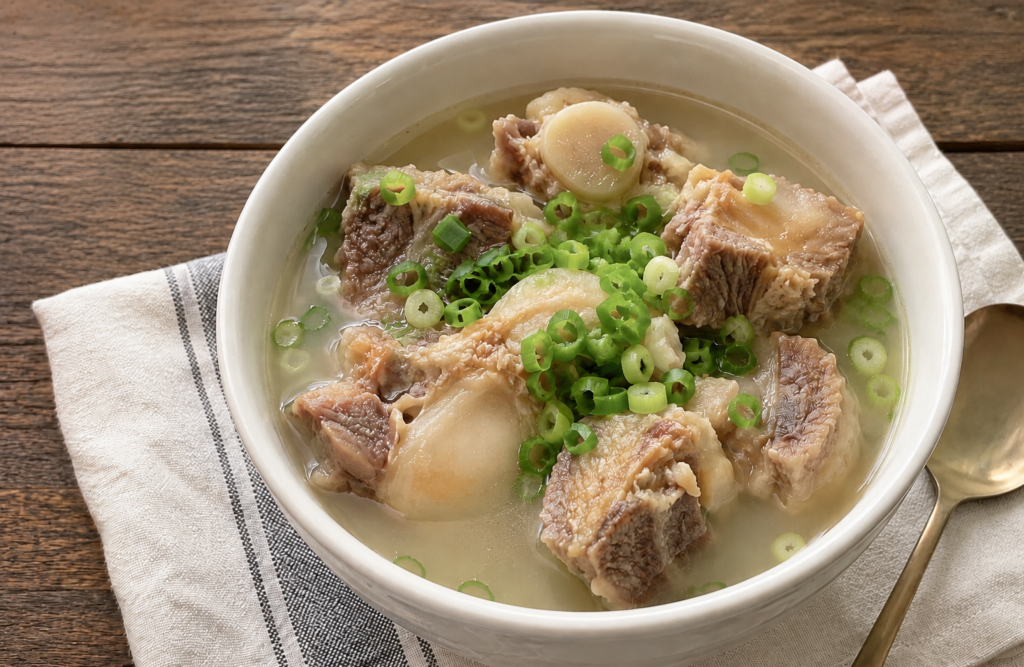
Korean oxtail soup, called kkori gomtang, is a mild Korean soup made by slowly cooking oxtail until the meat becomes tender and the broth develops a rich, silky body. It is commonly served with rice, sliced green onions, salt, black pepper, and kimchi, allowing each person to season the bowl individually. Traditional versions often include oxtail, Korean radish or daikon, garlic, and water.
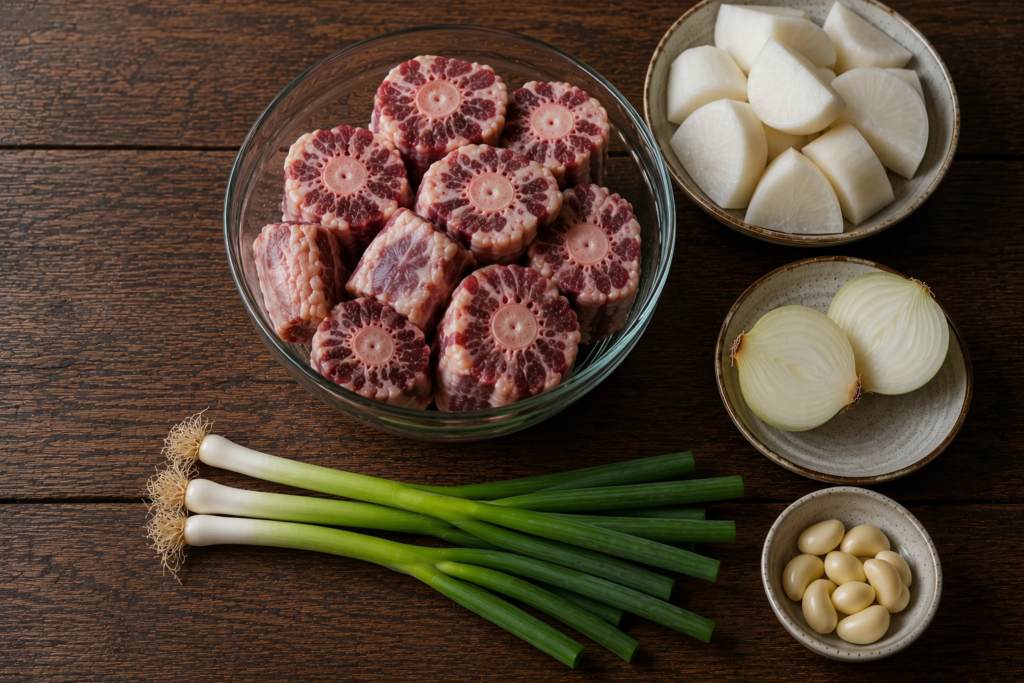
My slow-cooker version includes Korean radish or daikon, garlic, onion, and green-onion whites. These mild aromatics support the oxtail without covering its natural flavor. Korean radish is slightly sweeter and firmer, but daikon is a reliable substitute that is easier to find in many supermarkets.
Kkori gomtang is different from galbitang, which is made with beef short ribs. It is also different from seolleongtang, a creamy-white soup made by boiling ox leg bones for many hours. Oxtail soup may be clear, golden, lightly cloudy, or milky depending on the bones used and the cooking method.
How to Make Korean Oxtail Soup in the Slow Cooker
Step 1: The basic process is simple: soak the oxtails, blanch and rinse them, slow cook them with water and mild aromatics, then strain the broth, remove excess fat, and season each serving at the table.
Step 2: Choose oxtails with a good balance of meat and bone. Pieces around 2 to 3 inches wide tend to cook more evenly, although most packages contain a mixture of large and small pieces. I use 3½ pounds in a 7-quart slow cooker, which leaves enough room for the vegetables and water without overcrowding the pot.
Step 3: Place the oxtails in a large bowl and cover them completely with cold water. Soak for 1 to 2 hours, changing the water once or twice if it becomes dark. This helps remove blood and loose residue. When time is short, a 30-minute soak is still useful.
Step 4: Drain the oxtails and place them in a large stockpot. Cover them with fresh water, bring it to a strong boil, and cook for 8 to 10 minutes. Gray foam and residue will rise to the surface during this step.
Step 5: Drain everything into a colander and rinse each oxtail piece under cool running water. I gently rub around the bones with my fingers to remove any foam caught in the creases. This extra minute of cleaning produces a broth with a fresher flavor and neater appearance.
Step 6: Put the cleaned oxtails in a 7-quart slow cooker. Add large chunks of Korean radish or daikon, one halved onion, eight peeled garlic cloves, and the white parts of two green onions.
Step 7: Pour in 7 cups of fresh water. Add up to 1 additional cup only when needed to almost cover the oxtails. Keep the slow cooker no more than three-quarters full and never fill it above the marked maximum line. Crock-Pot recommends keeping its stoneware between one-half and three-quarters full for dependable cooking.
Step 8: Cover and cook on LOW for 10 to 12 hours. I prefer the LOW setting because it gives the connective tissue plenty of time to soften while keeping the broth gentle. The soup is ready when a fork enters the meat easily and the meat begins releasing from the bone with light pressure. Large center-cut pieces may need the full 12 hours.
Step 9: For a faster option, cook the soup on HIGH for 6 to 7 hours. Check the texture rather than relying only on the clock because slow cookers and oxtail sizes vary. If the meat is still tight or chewy, continue cooking for another 45 to 60 minutes before checking again.
Step 10: Carefully transfer the cooked oxtails to a large bowl. Remove the onion and cooked green-onion whites. Keep the tender radish pieces for serving, or discard them if you prefer a simpler bowl.
Step 11: Strain the broth through a fine-mesh strainer, then return the broth and meat to the slow cooker. Skim any large pools of fat from the surface. I leave a small amount behind because it carries flavor and helps the broth feel satisfying.
Step 12: For the cleanest soup, let it cool and refrigerate it overnight. The fat will harden into a firm layer that can be lifted away easily. The broth underneath may turn jelly-like because of the natural gelatin from the oxtails.
Common problems and easy fixes
- The broth tastes bland: Add salt to a full serving before judging the flavor. The main pot is intentionally mild.
- The meat is still tough: Continue cooking in 45- to 60-minute intervals until it releases easily from the bone.
- The soup is greasy: Refrigerate it overnight and remove the hardened fat, or use a fat separator while the broth is warm.
- The broth tastes weak: Strain it and simmer it in a saucepan for 10 to 20 minutes to concentrate the flavor.
- The broth looks cloudy: Cloudiness is harmless. Straining improves its appearance but is not necessary for flavor.
- The broth is not white: Golden or lightly cloudy broth is normal when using a slow cooker.
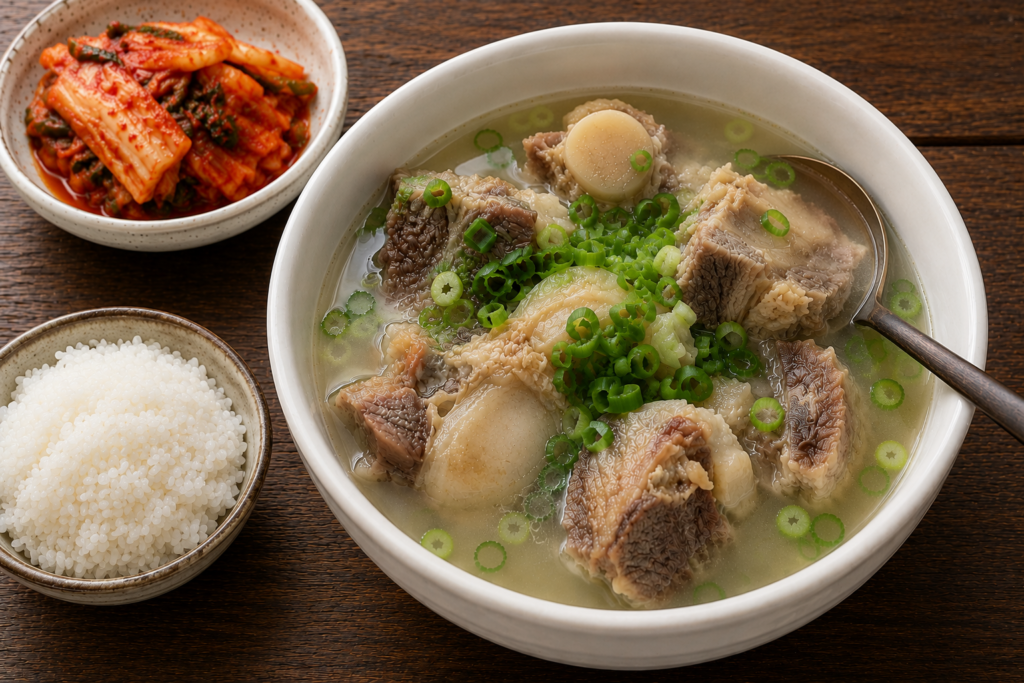
To serve, place one or two oxtail pieces and a few radish chunks in each bowl. Ladle the hot broth over them, then add thinly sliced green onions and black pepper. Let everyone add salt according to taste.
What to Serve With Korean Oxtail Soup
Steamed Rice: Steamed short-grain white rice is my first choice with Korean oxtail soup. I usually keep it in a separate bowl and add a spoonful at a time, although you can stir all the rice directly into the soup for a more filling bowl.
Kimchi: Kimchi gives the meal the contrast it needs. The soup is mild, warm, and rich, while napa cabbage kimchi is spicy, sour, and crisp. Cubed radish kimchi is another excellent choice, especially if you enjoy a little extra crunch.
Side Dishes: For a larger meal, add one or two simple Korean side dishes. Seasoned spinach, soybean sprouts, cucumber salad, roasted seaweed, or lightly seasoned vegetables all work without overpowering the broth.
Glass Noodles: Sweet-potato glass noodles are also delicious in oxtail soup. Cook and drain them separately before placing a small portion in each bowl. Adding uncooked noodles directly to the slow cooker can cause them to absorb too much broth and become overly soft.
Seasonings: I also put out extra scallions, kosher salt, and freshly ground black pepper. That allows everyone to adjust the soup without changing the entire batch.
Spicy Dipping Sauce: For anyone who likes heat, I mix gochugaru, minced garlic, toasted sesame oil, and soy sauce into a quick spicy dipping sauce. I dip small pieces of oxtail meat into the sauce instead of stirring it into the full bowl. This keeps the broth clean and mild while adding a spicy, savory bite whenever I want one.
Recipe Card
Slow Cooker Korean Oxtail Soup (Kkori Gomtang)
A comforting Korean oxtail soup with tender meat, silky broth, daikon, garlic, and sliced green onions. Each bowl is seasoned individually and served with warm rice and kimchi.
Cuisine: Korean
Course: Soup, Main Course
Method: Slow Cooker
Active prep time: 30 minutes
Soaking time: 1 to 2 hours
Cook time: 10 to 12 hours on LOW
Total time: About 12 to 14 hours
Servings: 5 to 6
Slow cooker size: 7 quarts
Ingredients
- 3½ pounds oxtail, preferably cut into 2- to 3-inch pieces
- Cold water, for soaking and blanching
- 1 pound Korean radish or daikon, peeled and cut into large chunks
- 1 medium yellow onion, peeled and halved
- 8 garlic cloves, peeled
- 5 green onions, divided
- 7 cups fresh water, plus up to 1 additional cup if needed
- Kosher salt, for serving
- Freshly ground black pepper, for serving
- Steamed short-grain white rice, for serving
- Kimchi, for serving
Optional Spicy Dipping Sauce
- 1 tablespoon gochugaru
- 1 small garlic clove, finely minced
- 1 teaspoon toasted sesame oil
- 1 teaspoon soy sauce
Instructions
- Place the oxtails in a large bowl and cover them completely with cold water. Soak for 1 to 2 hours, changing the water once or twice. Drain well.
- Transfer the oxtails to a large stockpot and cover them with fresh water. Bring to a strong boil and cook for 8 to 10 minutes.
- Drain the oxtails into a colander. Rinse each piece under cool running water, rubbing away foam and loose residue around the bones.
- Place the cleaned oxtails in a 7-quart slow cooker.
- Add the radish, onion, garlic, and white parts of 2 green onions. Reserve the green portions and the remaining 3 onions for serving.
- Pour in 7 cups of fresh water. Add up to 1 additional cup only if needed to almost cover the oxtails. Do not fill the slow cooker more than three-quarters full.
- Cover and cook on LOW for 10 to 12 hours, or until the meat pulls easily from the bone. Alternatively, cook on HIGH for 6 to 7 hours.
- Carefully transfer the oxtails to a bowl. Remove the onion and cooked green-onion whites. Keep or discard the radish according to preference.
- Strain the broth through a fine-mesh strainer. Return the broth, oxtails, and desired radish pieces to the slow cooker.
- Skim excess fat from the surface. For easier fat removal, refrigerate the soup overnight and lift away the hardened layer before reheating.
- Thinly slice the reserved green onions. Divide the oxtails and radish among individual bowls, add hot broth, and garnish with green onions and black pepper.
- Serve with kosher salt, steamed rice, and kimchi so each person can season the soup according to taste.
- For the optional dipping sauce, mix the gochugaru, garlic, sesame oil, and soy sauce in a small bowl. Serve it beside the oxtail meat.
Cook’s Notes
- For a 6-quart slow cooker, use about 3 pounds of oxtail, 12 ounces of radish, and 6 cups of water.
- Do not add soy sauce to the entire pot if you want a clean, pale broth.
- Golden or lightly cloudy broth is normal because a slow cooker does not maintain a vigorous boil.
- If the broth tastes weak after salting an individual bowl, reduce the strained broth briefly on the stove.
- Cool leftovers promptly, refrigerate for up to four days, and reheat to 165°F.
- Freeze cooled soup in airtight containers for up to three months.
Frequently Asked Questions
Do I have to soak the oxtails?
A 1- to 2-hour soak helps remove blood and residue that may darken the broth. A shorter 30-minute soak is still helpful when time is limited.
Why should I blanch oxtails before slow cooking?
Blanching releases foam, loose protein, and tiny bone particles before the long cook. Rinsing afterward gives the soup a cleaner flavor and appearance.
Should I brown the oxtails first?
No. Browning creates a deeper roasted flavor and darker broth. Blanching is a better choice when you want the clean, delicate flavor associated with kkori gomtang.
Why does my Korean oxtail soup taste bland?
The main pot is intentionally unsalted. Add salt to an individual bowl, stir thoroughly, and taste again before adding other seasonings.
Why is my broth not milky white?
A slow cooker does not boil vigorously enough to produce the same milky effect as a stockpot. Golden or lightly cloudy broth is completely normal for this method.
How do I know when the oxtail is done?
The meat should begin pulling away from the bone with gentle pressure. If it still feels tight, tough, or rubbery, continue cooking.
Can I use beef broth instead of water?
Water gives the soup its cleanest oxtail flavor. When using broth, choose an unsalted variety and replace only part of the water so the soup does not become overly salty.
Can I use daikon instead of Korean radish?
Yes. Daikon works very well in this recipe, although Korean radish generally has a slightly sweeter flavor and firmer texture.
Can I make Korean oxtail soup ahead of time?
Yes. The soup reheats well, and refrigerating it overnight makes the hardened fat easy to remove. The flavor also becomes more settled after resting.
How should I store and reheat leftovers?
Cool the soup promptly in shallow containers and refrigerate it for up to four days. Reheat leftovers to 165°F before serving.
Can Korean oxtail soup be frozen?
Yes. Freeze the cooled soup in airtight containers for up to three months, leaving a little space for expansion. Thaw it overnight in the refrigerator before reheating.